Author Archives: Damien

Photo update

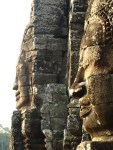
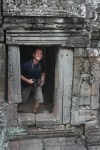
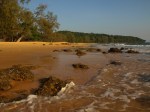
I’ve uploaded 100 photos from my time in Cambodia so far, from the first days in Ban Lung in the remote northeast to our blissful time on Koh Ru off the south coast.

Above are just some of my favourites, you can view all pictures via the Photo Gallery tab above or by clicking here

Categories: travel | Leave a comment

Action Cambodia

One of the common complaints about Cambodia that I heard while in Laos was that while it’s a great country with friendly people, “there isn’t much to do there”. Well those people weren’t trying very hard: there is loads to see and do and the last couple of weeks have been pretty busy. To make up for the lack of recent posts here’s a potted summary of the highlights of Cambodia so far:

Kratie

This slightly scruffy riverside village 350kms north of Phnom Penh is charmingly relaxed, and I spent a very pleasant couple of days there after Ban Lung. The compact town centre is dominated by a large and bustling market square with accomodation mostly along the riverfront, and everything is within just a few minutes walk. Until 2005 the only way to get there was by boat, but when the road came through ferry traffic was killed stone dead within months. The key tourist attraction is the local population of Irrawaddy dolphins that clusters twenty kilometres upriver, but as I’d seen them up close in Laos I skipped a second look. A couple of hundred metres offshore in the middle of the Mekong is a large island that by all accounts offers a great experience of rural life, and I had every intention of spending an afternoon there cycling around. However during lunch at the Red Sun Falling bar-cafe I got to talking to the owner Joe, and somehow didn’t leave the place until after 10pm…

Joe is American and very very very gay, and he’s been running his place for more than seven years so he had a mountain of stories to tell. The bar is closed between 2pm and 5pm but he let me stay as we chatted on and on about life, the universe and Cambodia while I sipped beer and he chugged pastis with gusto. He gave me fascinating insights into some aspects of life here both for locals and expats, and his bar is the defacto meeting spot for NGO workers in town (which number around twenty at any one time) so I got to chat to some of them as well. Hard on the liver, but otherwise a brilliant day all round…

Phnom Penh

Phnom Penh is a superb city to visit, big enough to have a huge range of attractions (and a very sharp and diverse nightlife) but small enough to be friendly and easy to get around. I arrived on a Thursday so I’d have enough time to find a decent hotel before Kristen arrived on Saturday morning, and I saved all my sightseeing until she arrived. We stayed four nights there and fitted in most of the popular highlights: strolling the waterfront bars and cafes, including the famous Foreign Correspondents Club bar for drinks and tapas; buying cheap DVDs and spending an afternoon at a swimming pool attached to a bar on 278 St (an idea that should be replicated in Sydney if the safely police would allow it); having a two-hour oil massage for just $18; visiting S-21 and The Killing Fields; dining at Friends restaurant and it’s sibling Romdeng; going to the Russian Market where we bought some cheap t-shirts and had a delicious market lunch; having a look at the sadly-depleted Boeng Kak lake, which still houses a budget backpacker scene despite the lake now being an ugly and somewhat stinky eyesore; witnessing an early morning wedding procession; strolling the streets on foot, and later touring around in a tuk-tuk to see how the suburbs change. The only major tourist attraction yet to be seen are the Gold and Silver Pagodas, but we will visit those on Kristen’s last day in Cambodia this Saturday. I’ve now spent seven nights in Phnom Penh already and I’m looking forward to getting back there again: it’s a place that has the balance just right at the moment 🙂

Siem Riep

This town is much better than I expected, and like Phnom Penh is highly recommended. Though it acts primarily as the service town for the magnificent temples of Angkor Wat and others, it’s got a lot to offer in its own right and could easily detain an idle traveller for a week or two. The range of bars and restaurants is brilliant, and as we arrived on my birthday we spent a fine night first at a grungy bar with great 90s music for a beer or four before shifting gears at seeing the evening out over tapas and wine at a tiny upscale bar. Nice. Of course the reason to be there is the temples, and though all the advice says that you can’t see them in a day we knocked over four of the best in just six hours and were content with that. The overgrown Ta Prohm was the favourite (it was featured in the original Tomb Raider movie), followed by labyrinthine Bayon then the huge but sparse Angkor Wat.Wandering the temples in 34 degree heat is hard work even with a tuk-tuk to ferry you around, and we very happily retired to the air-conditioned bliss of the hotel afterwards.

Battambang

A gorgeously relaxed country town with one of the most interesting tourist attractions in the country: the bamboo train. The product of necessity and ingenious creativity, the bamboo “train” is simply a flat platform about three metres long made of bamboo that rests on two axles with a small two-stroke motor driving one of the wheels. They were designed by locals in the 1970s to transport people and goods on the same rails used by normal trains, which normally would create an obvious problem when a big train comes through. But this is where the genius of the idea comes in: it’s simple construction means it can be disassembled in seconds and placed beside the rails until the train passes. It is still used by locals from time to time, especially in the rainy season when the roads are very slippery and rutted, but mostly it exists now for tourists to take a ride. And what a ride! It zips along at a remarkably fast rate, and being so close to the ground just enhances the sense of zoom. We shared our train with an old guy from Echuca who said he’d been on loads of trains around the world but found the bamboo train the most original and exciting. Comfortable it ain’t, though: the man who sent us on our way down the tracks said “get ready for a Cambodian bum massage”….

Battambang is also surrounded by some very interesting other sights, and while we only had time to visit one place it was definitely worth it. Phnom Sampeau is a steep hill with commanding views of the plains below, on top of which is a Buddhist temple that was rebuilt after the original was destroyed by the Khmer Rouge. Phnom Sampeau also has a darker history: halfway up the hill is a beautiful cave with a natural skylight many metres above that used to be used by local villagers to pray for good crops and rains. During their reign of terror the Khmer Rouge used it for killing people, forcing people to kneel on the edge of the skylight. They were then bludgeoned so that they fell down into the cave, dying either at the top or the bottom, and the bodies piled up in a heap below. The cave once again contains a shrine, and some of the bones of the victims are honoured within.

Kampot

The main attraction of this seaside town is the abandoned hill station of Bokor, used by the French from 1925 to 1972 as a luxurious elevated retreat from the heat. It was abandoned when the Khmer Rouge swept through the area and is now a ghost town, and we were very keen to visit. Unfortunately the road to the site is currently not open, and you can only visit by trekking for three hours up a steep ravine. The whole experience takes a full day and we simply didn’t have enough time to do it, settling instead for a few drinks and good food on the riverfront after a particularly difficult day of travel drama (details to follow in the next post – it’s a good story!)

That’s the highlights to date…. we’re currently sitting in a beachside bar on Serendipity Beach in Sihounoukville having breakfast and checking the interweb while waves lap the sand just ten metres in front of us. Dinner last night was served in comfy chairs on the sand barely three metres from the water, and the meal of fantastic grilled barracuda cost just $3 each. Today we went for an early morning dip in the ocean when almost noone else was around, with the water a bath-like 24 or 25 degrees. This afternoon we’re off to an offshore island to spend a couple of days in a basic beachside bungalow for some serious relaxation without the crowds or hawkers…. Cambodia is definitely a place where you can choose your holiday mode and find somewhere great to indulge it. Five weeks here is barely enough 😀

Categories: travel | Leave a comment

Happy Birthday to me!

Thanks for the all the birthday wishes guys, there were lots of them this year which is great 😀

Sorry for the lack of updates recently, I’ve been taking it rather easy. After a couple of lazy days in the riverside town of Kratie then a night in Kompong Cham, I’ve been in Phnom Penh since Thursday. Kristen arrived on Saturday so the two of us have been sightseeing our way around this great city, will do a more detailed post soon.

We’re currently sitting in a cafe having a late breakfast, soon it’s off to the bus station to catch a bus to Siem Riep and the famous temple complex of Angkor Wat. Yep, it’s still a hard life!

Categories: travel | 3 Comments

Ratanakiri

The northeast corner of Cambodia used to be very remote and difficult to reach, with the appalling state of the only road to the province restricting regular transport links. But in just a few short years the road has improvedly significantly and with it has come an avalanche of new bus services. It’s now possible to get to Phnom Penh in just ten hours on a good day, and there is talk that the main road will be fully paved within three or four years.

For the time being, however, NH78 is still unsealed and throws the signature red dust of the region over everything that passes. The 140 kilometre stretch of dirt varies from a smooth well-graded expanse as wide as a football pitch to narrow rutted tracks joined by creaking wooden bridges that look like they won’t survive the next wet season. This is a very poor region: poverty visible from the bus ranks with some of the worst I saw in northern Laos. Tiny wooden huts built on stilts to escape the wet, sometimes with only three walls and always nearly free of any furniture. In or under these wispy structures families cooked, slept and lived, and the surrounding countryside was often sparse and devoid of useful crops or firewood. For the first time on this trip I felt a sense of desperation in the locals, and to see the weary dead-eyed look in the eyes of a fifteen year old youth was singularly depressing. I met an aid worker called Chris who is helping to establish schools in remote villages here, and he says that once you get more than ten kilometres out of Ban Lung conditions can be “medieval”.

Ban Lung is nonetheless a lively town of around 25,000 people, the provincial capital that also acts as a service centre for all the surrounding and far-flung villages. Chris says that when he first arrived three years ago there were no sealed roads here; now all the main streets are tarmac and through the town the highway is a huge dual carriageway with flowered median strip. The improved transportation has brought more tourists, and while it’s not on the mainstream backpacker circuit yet this area is attracting more and more adventurous types, especially those wanting to trek in the savannah and jungle northeast towards the Vietnamese border. Ban Lung also has some unusual quirks that I never saw in all my travels through Laos, even though Laos is nominally much poorer. For example ice is still delivered in the morning to street vendors on a small trailer hinged to the back of a motorbike, the food and drink sellers sawing the metre-long frozen rectangles to suit and placing the chunks in large plastic chests to keep their wares cool for the day. Nearly every petrol pump is simply a 44-gallon drum on its end with a hand-crank on top, feeding into a large clear glass cylinder so the purity of the fuel can be seen and quantity measured. There is always a parasol on top to prevent this improvised explosive device from going off, but punters still smoke while being refueled.

As the only service town for the whole province, the market area is packed with stalls and shops selling all manner of goods not normally available in the villages. Ban Lung is where you come when you want roofing materials, hardware, pots and pans, medicines, furniture, childrens’ toys, whitegoods, clothing, scooters, shoes and most widely available of all: mobile phones. It seems that every third store is a phone vendor, all hawking the same chinese knock-offs that have flooded markets further north. The food market features the usual plastic hessian roof hung five feet off the ground to offer some protection from the sun; it’s the perfect height for the locals, and I’ve gotten used to stooping endlessly when wandering such places. Here though the heat was particularly oppressive: around the meat section I noticed thick black tubes strung across alleys at head height, which on closer inspection were revealed to be normal thin ropes with a solid crust of well-fed flies.

There are some strange contrasts in the marketplace too: DVD shops also stock a healthy range of modern pop on cassette tape, and television stores carry ancient transistor radios alongside older-style television sets. The market and surrounding streets of shops – all with rubbish liberally strewn along the dusty red verges – are pretty much all you will find in the town; apart from street food vendors and perhaps a dozen restaurants and guesthouses there is little in the way of suburbs. Walk just two kilometres in any direction and you’re well and truly back in the bush, but it’s not all rustic. On a Sunday morning stroll I noticed two small roller rinks for kids, public volleyball courts and even a small ferris wheel on the restaurant strip beside the town’s Kansaign Lake.

The main tourist attraction near town is a volcanic crater lake called Yeak Laom, described in the guidebook as “one of the most serene and sublimely beautiful sites in all of Cambodia”. Quite a rap, and enough to make me walk the four kilometres from town to have a good look. It’s pretty and pleasant, but if this really is one of the natural highlights of Cambodia then I won’t be diverting myself greatly in the future. Vegetation reaches right to the shore and it’s only a few hundred metres across, so you can take in the whole lake in one pleasing view. You can swim in the lake, which I didn’t. You can walk around the lake, which I did. At first glance I thought the area was nearly empty of life, with almost no bird life apparent and the water eerily dark and quiet. However once I started walking the lake’s edge I began to hear the birds and crickets clearly, and moths and butterflies flitted freely about. Snakes and lizards slid noisily off the path as I walked, and I made sure I clumped along as loudly as possible so they would keep away. On the walk back I stopped for lunch at Norden House, which quite improbably is a Swedish hotel and restaurant on the road to the lake. I had to try the house special – Swedish meatballs with mashed potato – which was excellent and authentic, right down to the gravy served in a jug and dill pickles and lingonberries on the side.

I desperately wanted to do a two-day kayak tour while here, but unfortunately the guides won’t do it for just one person and noone else has been interested over the past few days. I considered doing an overnight trek but decided against it, partly for cost and partly because the shorter treks on offer didn’t really interest me that much. I’ve been quite happy to stay in Ban Lung, a decision greatly aided by yet again finding some superb accomodation. Tree Top Eco-Lodge has eleven fabulous bungalows widely spaced on the side of a valley, with rough wooden walkways through the treetops joining them all to the airy and all-wood bar-restaurant. The near-new wooden bungalows are huge with very high ceilings, fan, large balcony and hammock with views over the valley. Each also has a private cold-water bathroom attached, though it’s open to the elements enough for me to find a frog loitering in the toilet bowl last night! The cost for this extravagance: US$10 a night. It’s so pleasant that I haven’t rushed to leave Ban Lung, and it’s been easy to find other travellers to talk to because it’s popular too. Tree Top Lodge is far and away the best value accomodation option in the area, and even though it’s too new to be in most of the guidebooks a reservation is still strongly recommended.
Categories: Cambodia, travel | Leave a comment

Welcome to Cambodia

I was sitting still in Si Phan Don for so long partly because it was so lovely, and partly because I didn’t have any urge to move on for a while. In fact the thought of travelling further was very off-putting for a few days there, but I knew that the urge would return if I simply waited long enough. Well it came back with a vengeance on Tuesday, which is the first day for a nearly week that I’ve felt lively and active. Suddenly the idea of lazing in a hammock staring at the water held no further attraction; not that I regretted all the downtime I’d spent there so far! One of the greatest benefits of this kind of travel to me is that you can sit still for days if you want to. It may be many years before I return to that idyllic part of Laos – and when I do it will no doubt be quite different – so I wanted to leave there because I’d had my fill, not because I had to be somewhere else. It turns out one week was the perfect length of time 🙂

After exactly fifty days in Laos I was keen to get over the border to Cambodia and see a new land. But I have plenty of time still and don’t want to rush it, so my first goal was always going to be Stung Treng just an hour over the border. It’s where transport to the remote north-east departs from and is a decent-sized town, so surely it was worth at least one night. Besides I didn’t want to spend a whole day in a bus which is what the vast majority of other travellers were planning to do. Being on Don Det in Si Phan Don exposed me to many more budget travellers than I’ve seen in the one small place so far, and it came home to me how different my mode of roaming is on this trip compared to most people. For example of the forty or so people on my bus over the border (who were all westerners), exactly one person got off at the first stop: me. All the rest were carrying onwards to Kratie or Kompong Cham, but mostly to Phnom Penh. Another bus had gone ahead of us aiming directly for Siem Riep – more than twelve hours away. Even in this age of mass travel, it’s remarkably easy to avoid the hordes if you’re prepared to take just a few more steps along the beaten track than the rest.

And anyway I had an inkling that crossing the border would take a while, so the idea of suffering a long bus journey afterwards seemed nuts to me. And I was right: the border is less than 25 kms from Don Det, yet it took us almost four hours to hit the road again on the Cambodian side… things started simply enough at 8am with a short boat journey from the island to Ban Nakasang on the mainland, where a bus was already waiting. And waiting. And waiting… for no obvious reason it was nearly an hour before we set off for the border, arriving there a little before 10am. Exiting Laos was straightforward, and to my surprise I was not charged for overstaying an extra day. I don’t think they noticed: the Customs guys were too busy extracting a US$1 “fee” from everyone on the bus. We all knew it was a self-imposed bribe but few grumbled and noone refused that I could see, we just wanted to get the process over with. We then had to grab our bags and walk a hundred metres across a paved no-man’s land to the Cambodia side, where the circus really began.

First up was a Quarantine desk where we filled in a short form, had our temperatures taken with an infrared ear thermometer, and were explained in atrocious english what we should do if we showed symptoms of H1N1 flu (is that still a problem?). And we were clipped another US$1 for the privilege of listening. Then to the Visa Office where visas on arrival are obtained. We all knew that it should cost US$20 each, but here it was US$23. I am convinced the extra $3 was because there were three guys in the booth, honestly. Another US$2 if you’d forgotten your passport photo (I got a dozen made up in Sydney so I’d never be caught by that one!). Then to the third and final booth where your visa was stamped and you were officially allowed into Cambodia. After coughing up another US$2 there, that is. By this stage there were loud and mutinous rumblings from some people – almost all of them Europeans, if you’re interested to know. A German guy simply refused to pay the last bribe, saying he was a cop and he knew what was going on. He was waved through; he’s actually a bus driver.

Once through, we waited. Again. For nearly two hours we sat in the stifling heat, waiting until the bus had filled up enough with new passengers for the bus jockeys to decide they could move on. For two unlucky sods there was a final hassle. They were cycling from China to Thailand, but had decided to take the bus for this stretch because it was supposed to be unscenic (which is true). They had bought their tickets on Don Det, confirming first that their bikes would be allowed on the bus all the way. Just as the Cambodian bus was about to depart – in other words almost two hours after they’d first shown their tickets – they were forced to pay again if they wanted their bikes to be loaded. They knew they were being screwed and eventually paid up, but one of them sat next to me for my short trip and he was openly calling it extortion. Which it was, of course. Or you could put it another way: “welcome to Cambodia”.

Categories: Cambodia, travel | Leave a comment

Create a free website or blog at WordPress.com.

Design a site like this with WordPress.com
Get started