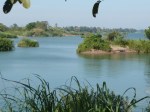
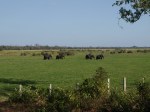
Author Archives: Damien

Best of Laos

Now that I’m at the very bottom of Laos about to head south into Cambodia, I’m encountering numerous travellers heading the other way who want to know what I think are the ‘must-see’ parts of this country. And to be honest, when I think about it there aren’t that many. But this place has a calming influence that permeates every aspect of life, and some of my best times here have been spent in smaller out-of-the-way places simply existing at the local pace.

Laos has its problems. It’s not a democracy: it’s a single-party State that combines low-level capitalism with high-grade cronyism. Transparency International ranks it as one of the most corrupt countries in the world, more corrupt than Sierra Leone, Bolivia, Pakistan, Indonesia or Ukraine. Only failed or pariah states like Somalia, Myanmar, Iran, Afghanistan and the other ‘Stans rank lower. That crudest measure of wealth, per capita GDP, at approximately US$850 per person per year places it within the forty poorest nations in the world (Australia measures around US$48,000 a year).

But it doesn’t feel so poor when you travel around. The majority of the population live in small rural villages and produce or gather all of their own food, selling what surplus they can for some cash, and generally this fact is not represented in official economic stats. Most kids go to school, even though the schools can be as simple as some chairs set up underneath a thatched awning. I’m not saying people don’t want more – I’m sure everyone would like some better mod-cons to make their life easier, or a new tractor, or scooter, or whatever. Better services such as health care are definitely needed. But there is unmistakably a joy of living and a generosity of spirit here that many “richer” countries lost long ago. And guilt-free enjoyment of the simple art of doing nothing: taking a daytime nap or lazing in a hammock is commonplace and unremarkable, and they haven’t even bothered to formalise it into a rigid siesta time…

So for me, with all the time that I’ve had to indulge, it’s been the quiet, local, relaxing places that have appealed as much as the obvious highlights. But for those planning a trip here (and I highly recommend it), this is my personal list of ‘must-see’ places:

Luang Prabang – an exotic mix of French colonial architecture, temples, the Mekong and high quality restaurants and bars. Not remotely like the rest of Laos because it is completely devoted to tourism, but definitely a highlight

Nong Khiaw – a tiny village north of Luang Prabang, best accessed by slow boat up the Nam Ou. Slow and lazy with guesthouses spread along the eastern shore so you watch the sun set from your balcony, there are some nice short tracks into nearby hills if you want to get active. Much nicer, so I’m told, that the nearby Muang Noi Neua which used to be idyllic but is now touristed to death

Vang Vieng – you have to pass through here when travelling between Vientiane and Luang Prabang, so why not stay a night or two? Great karst scenery, many caves to explore and tubing or kayaking on the river is available too. It’s known as a party town and you can have as big a night as you want here, but it’s easy to keep it quiet if preferred

Vientiane – the sleepiest capital in the world, spending a few days here soaking up the atmosphere is great. Dining on the banks of the Mekong at sundown, have a cheap but quality massage or spa treatment, an excellent range of local and international style restaurants, bars ranging from Lao-style beer barns to backpacker joints to classy nightclubs where jeans are out and cocktails are in… this place certainly hasn’t got it all but that’s part of the charm

Kong Lo cave – a seven-kilometre journey by boat underneath a mountain, passing through low tunnels and cathedral-like caverns on the way. I don’t know if it’s the largest cave in the world you can travel through without special equipment, but it certainly feels like it. Stay near the village for an even more exotic experience – almost everyone else comes here on a day-trip

Pakse – if you have time to come down south, Pakse is the perfect base to see an increasing range of great sights. The waterfalls and coffee plantations of the Bolaven Plateau, Wat Phu near Champasak, the elephants of Ban Kiet Ngong, loads of multi-day treks in every direction, all are available from here and the town’s got a sedate feel about it too. Make sure you have at least one drink or meal at the rooftop bar of the Pakse Hotel at sundown, the view there is spectacular

Si Phan Don – only a couple of hours south of Pakse, this is still a paradise-like island despite the increasing numbers of backpackers. Every famous tourist place like Waikiki, St Tropez or Phuket was once upon a time just home to a handful of villagers and the occasional traveller, and Si Phan Don feels like those places must have done before the hordes came. I would not be surprised in thirty years time to find it dominated by soulless hotels and resorts, for the time being there are still rice paddies and pigs and chickens and most locals don’t rely entirely on tourism to survive. It’s basic but that’s part of the charm, and it won’t stay like that forever

I have not been to every corner of Laos, so there may be other gems that I can’t talk about yet. There’s apparently great trekking around Luang Nam Tha in the northwest, and The Gibbon Experience up that way gets very strong support from everyone’s been there. Then there’s the Plain of Jars near Phonsavan, the wartime caves near Sam Neua, the elephants of Hongsa, truly remote trekking east of Attapeu… all good reasons for me to return too!

Categories: Laos, travel | Leave a comment

Stunned in Si Phan Don

I received one of those life-changing phone calls the other day. One of the ones that you just know, instantly, will become a crucial pivot point when looking back along your life’s arc. After more than twelve years working in the same job, the only one I’ve ever had since leaving university, I suddenly don’t have a job to return to. They are getting on so well without me that my job has been restructured out of existence while I’m away.

To say that I didn’t see this coming is something of an understatement. I’m floored, shocked, flabbergasted, stunned like a mullet. I had always intended to return to work refreshed after this big break, and had no inkling that that might not be possible. In fact I have structured my life over the past year around the fact that I would have a job to return to when I got home. So I’ve spent the last two days alternating between swinging from a hammock deep in thought, sleeping, or wandering to the very expensive internet cafe to get the support of friends. I’ve had no appetite, but I’ve forced myself to eat. When my mind is calm enough I read, choosing between the lyrical beauty of Haruki Murakami’s short stories or Gabriel Garcia Marquez’s epic One Hundred Years of Solitude. Often I just stare into the distance.

At least I’m in the perfect place for such a crisis: Si Phan Don really is the paradise it’s made out to be. Arriving on Don Det island mid-afternoon four days ago, I ignored all the cheap places near the boat landing and headed straight for the Sunset side of the island. From my kayaking trip last week I knew this side has the best views: sweeping vistas of the Mekong and a clear view of the hills of Cambodia beyond. I wandered along the dirt track looking for something suitable, and literally stumbled upon Tena Guesthouse. With just five simple bungalows, all with spectacular views and a couple of hammocks, I got lucky as four of them were vacant (it’s been full since then). The shared bathrooms have western thrones, the showers are almost warm and the food onsite is very good. There is no need to worry about reservations, or giving notice, or anything. Now that I’m here I can stay as long as I want and simply pay the $4 a night it costs to stay when I leave. Perfect.

The only thing I have to decide soon is when to leave. My Laos visa expires on Tuesday and I have to decide whether I stay here beyond that or head to Cambodia as planned. There is a fine of US$10 a day if you overstay, but I really don’t have the urge to move on just yet…

Categories: travel | 2 Comments

How to ride an elephant

When I told Kristen I was going to learn how to ride an elephant she said that I’d reached the point where “you’re just trying to do the most random crazy shit now, aren’t you?” And she was right: a one-day mahout training school was about as out-there an idea as I could come across, and that’s exactly why I wanted to do it. I mean how often do you get the chance not just to take a ride in a buggy on an elephant’s back, but actually sit up the front and direct the beast? Not often I reckon, so I was into it like a shot!

Ban Kiet Ngong is located about 60km south of Pakse, and along with Hongsa is one of the very few places in Laos where elephant rides are possible. The village still has 14 working elephants – far fewer than it used to – that these days are mostly engaged in offering rides to tourists. Most commonly they take people up to the mysterious archaelogical remains of Phu Asa, and the whole experience is a model of modern eco-based tourism that benefits the local villagers while protecting the area’s ecological and historical significance. You can stay in the village too, either as a homestay or at the very basic but cheap village guesthouse (A$5 a night). Or you can stay at the rather more luxurious Kingfisher Lodge on the village fringe, which has two levels of accomodation on offer. No prizes for guessing which I chose…

Kingfisher Lodge is a genuine eco-lodge, not just in (much-abused) name but also in practice. All the bungalows are constructed of local materials and have been carefully designed to maximise natural light and ventilation, thus reducing electricity usage greatly. Solar heating and lighting reduce demand even further, and all the rooms have a very spacious, airy feel. I chose the budget option with shared bathrooms, but as there are only four rooms at this level it’s very comfortable. The only drawback is that the walls are paper-thin, and in the still black night you can (and I did) hear someone farting from twenty metres away. Overall it’s a very relaxing place and the central lodge with bar and excellent restaurant looking out over the protected Xe Pian wetlands makes you feel like you’re in Africa, complete with elephants roaming in the distance.

The other key attraction of Kingfisher Lodge – and this is what drew me there – is their range of activities that are available exclusively to Lodge guests. You can do a two-day trek to remote villages, go mountain biking and more, but the one that caught my attention was the “Elephant Rider School”. Over two two-hour sessions you learn how to direct the elephant and practice your skills by taking a couple of trips through the local area. The “lesson” part of it was incredibly short, as it turns out. The day before I was given a sheet with explanations of the basic commands, and I assumed the first session would largely be spent off the elephant as you (and the elephant) got used to giving the commands. Nope. Upon arrival I was directed to climb up: the instruction “song, song” made the elephant raise one of its forelegs so it was like a footstool, and by hauling myself up with a rope I was soon perched precariously on her neck, almost on her head really. The real mahout and the english-speaking Lodge guide climbed into the buggy that was already strapped on behind me and away we went!

It’s not that complicated to ride an elephant, as it turns out, but definitely requires practice. The command “hoooaay, hoooaay” means go, “how, how” means stop, and you turn left by pressing your right knee to her right ear and turn right by pressing your left knee to her left ear. Simple, eh? It would be if this was a machine, but it’s not. It’s a five-ton animal with food on it’s mind, and lots of it: your average asiatic elephant eats 200-300kg of vegetation a day and drinks 150 litres of water. Once we left the village grounds I spent a lot of time yelling “hoooaay!” while she stood still munching away on the nearest patch of grass, occasionally flapping her ear against my leg as I frantically tried to nudge her in the right direction. But with a bit of perseverance and considerable help from the real mahout we got going, and headed off for a lumbering tour of the wetlands. I gradually refined my voice commands by mimicking the mahout, and over time he had less need to “enhance” my ear nudges with strong prods from his feet. Towards the end of the first session I was told that I was doing really well, but I couldn’t avoid thinking they were just humouring me.

Still once I got used to it it was a load of fun, and rather surreal. There is no saddle at all for the rider, you simply sit on her neck with your legs dangling as low as possible to keep upright. It’s okay to put your hands on her head for support, thankfully, but even so I was still gripping with my thighs for grim life the whole time. After two hours they were on fire, and my bum was thoroughly kneaded by the constant grinding from the top of the elephant’s shoulders as we plodded along. I gradually learnt to nudge left or right by raising my foot and placing it on her shoulder to push her ear in the right direction, and that got good results. My voice commands improved, and by the end of the first session I was more confident but still feeling very much a novice.

Fortunately I had over two hours to go back to the Lodge, have a shower (it was another hot day), eat a sedate lunch and read for a while before session two. Normally this is a tour up to Phu Asa along a wide dirt track, but as they are currently paving the road that was off limits. Instead we headed into the forest, something they very rarely do with newbies like me. Apparently I really was doing okay, because this time around the mahout barely said a word and rarely had to aid my directions. I had a much better feel for my mount and she was responding more readily, and the diversions for a snack were blessedly few. There was a real sense of adventure heading into the forest, and even though we were following well-trod elephant paths I was pleased that my increasingly subtle commands were followed promptly – well, mostly. I even got to the point where I could balance without using my hands, but I kept them close to her head just in case a sudden lurch threw me sideways as it’s a long way down from the top of an elephant. My legs were thoroughly sore though, and it was only with a solid clenching of the buttocks towards the end (no gratuitous jokes here please) that I was able to carry on until the end. Once again my marathon training pays dividends…. At the start I was told that whenever I got tired I could relocate to the buggy to rest up but I never did, and that almost never happens so I’m told. Older people especially find it very hard on hips and thighs, and even the Lodge guide said that he had to take a break after forty minutes when he had his first ride!

School over, I headed back to the Lodge to rest and reflect. And decide that I really like this place and would stay another day – this time in one of the luxury stand-alone bungalows. I simply wanted to have a quiet day afterwards, partly to rest my legs but also just to kick back and relax on the very inviting industrial-strength hammock on the bungalow’s private balcony while reading some Murakami. The budget rooms are nice but not very private, and I was in the mood for some genuine peace. I also needed time to write these posts, something I haven’t had the desire to do for a while. I justified my indulgence by saying that this night was the exact half-way point in my long journey, and surely it’s appropriate to celebrate it in style? But those who know me well will know that I really don’t need much encouragement to splash out on some luxury 😛

Categories: travel | Leave a comment

Kayaking to Cambodia

Si Phan Don (literally “four thousand islands”) is an idyllic part of the Mekong at the extreme south of Laos, on the border with Cambodia. There aren’t actually thousands of islands here but dozens, and the pace of life is dreamily slow. It has a reputation as a backpacker haven, a place where in the words of Lonely Planet life is “so laid back that you could imagine the islands just drifting downriver into Cambodia with barely anyone rolling out of their hammock in the process”. That might have been true five or ten years ago when it was difficult to cross the border, when coming to Si Phan Don required lots of time to get down here and then back up again after you’d had enough of chillin’. But now that through travel to Stung Treng and beyond in Cambodia is rididculously easy, it’s become an almost-mandatory start or end point for those visiting Laos for any length of time. The ‘Lonely Planet Effect’ has transformed the most popular islands of Don Det and Don Khon into what is effectively a giant backpacker resort: now there are dozens of small properties each with a few bungalows on or near the river, distributed up and down the banks of each island. It’s still a very peaceful and beautiful place, but it’s no longer as remote as when there were just a handful of simple shacks available for as little as a dollar a day.

I’d always intended to finish my trip to Laos there, and I still will, but I was expecting it to be quite crowded so I was also keen to find a different way to visit the area. When I discovered that the eco-tourism outfit Green Discovery offers two- or three- day kayaking trips to Si Phan Don I signed up as soon as I got to Pakse. To make it affordable I had to wait for some others to join the trip, and in the end the only people who were interested wanted to do a two-day trip instead of the three-day version I preferred. But it turned out two days was plenty, and along with the unique perspective offered by floating downriver we still got to visit all the highlights of the area and spend a night on Don Khon, so I now have a much better idea what to expect when I arrive there again tomorrow.

After a three-hour minibus ride to the boat landing that heads to Don Khong, by far the largest island in the area, we packed our gear into drybags and mounted up. Our party was small: just myself, Australian couple Tom and Belinda, and our guide Don (also known as Tigerman). Initially Don wanted he and I to share a kayak, but I was keen to paddle alone so I insisted on one by myself. After making it clear that it would be quite an effort as the kayaks were large and designed for two or three people, Don relented and he and I both had separate vessels while Tom and Belinda shared. I think Don was hoping I’d prefer to share too; now he had to paddle all the way by himself as well! The sun was bright and strong as we set off, and I quickly revelled in the freedom of paddling my way down the Mekong to Cambodia. Our first day involved a lot of paddling: close to 20 kms in fact, much of it into a stiff headwind, and I experimented with different strokes, rhythms, and grips throughout the day trying to find the most efficient way to move. The two-in-one kayak of Tom and Belinda had “turbo power” as Don said, and they set a strong pace that was an enjoyable effort to keep up with. I’ve never kayaked so far or so exotically in my life and I was loving it 🙂

Past riverside villages, a car ferry, kids playing in the water, people bathing or washing clothes, all under the penetrating glare of the unforgiving afternoon sun. Lunch on a small beach in the middle of the river was a picnic affair of sticky rice, noodles, vegetables, and most contentiously an array of cooked meats that probably flouted every food hygiene standard imaginable back in Australia. Lao sausage (essentially little balls of pig fat in small casings), diced chicken, strips of the popular local dried beef jerky, a large “fresh” pork sausage that looked rather uncooked in parts, and dried fish – all of which hadn’t seen a refrigerator for at least seven hours (if at all). It was an extensive but very typical Lao picnic and I hoed into everything except the fish. Tom and Belinda avoided all the meat, as they’re naturally cautious and had suffered food poisoning only the week before. My fingers were metaphorically crossed behind my back but I was hungry, and if it was good enough for Don it was good enough for me. I survived.

We pulled into Don Det late in the afternoon after more than five hours of paddling, and headed off to a lovely outdoor bar-restaurant to watch the sun set over the Mekong while our kayaks were towed away for the night. The sunset was spectacular and much better than the one in Vientiane; here you could see the sun descend all the way down into the hills of Cambodia without it getting lost in low hazy clouds. I will definitely return to this spot at least once before I leave Laos. After a hair-raising bike ride through the dark with little illumination and no brakes we arrived at our bungalows for the night on Don Khon, and the welcome relief of a shower and change of clothes. Before dinner Don treated us to a special ceremony called baci. This Lao tradition is performed whenever people arrive from or are about to set out on a big journey, and involves a shaman saying prayers and lighting candles before tying a number of white threads around your wrist. Before tying they are waved up and down your forearm while he intones words to the effect of “out with the bad energy, in with the good”. You wear the threads for at least three days, after which you can remove them but only by untying or pulling, never by cutting. It was a simple but special ritual, and Don said afterwards that in two years of working for Green DIscovery he had never before done this with foreigners. He felt we were a very good group of people, and I was humbled to be honoured in this way.

The next day we visited a famous temple on Don Khon, and were given a lengthy and detailed explanation of the life of Buddha before he became Buddha. Then to the massive Li Phi waterfall complex, a huge expanse of numerous rocky canyons and falls down which a good proportion of the Mekong tumbled. The French attempted to blow it up almost a hundred years ago pursuing their dream of creating a boat passage upriver, but one glance at the sheer extent of the rocky falls could tell you the plan was futile. It’s even more impressive in the rainy season, apparently. We put our kayaks into the river just below Li Phi, into a narrow chasm that still had quite a swift flow. Unlike yesterday we were instructed to wear our lifejackets and helmets and keep a good distance between the kayaks to avoid pile-ups, and I was the last to set off. Round the first bend was a small but fast rapid, and as I turned the corner I could see immediately that Don and Belinda had capsized. They were still hanging on to their craft and were floating to a large overhanging rock that formed a small and partially sheltered pool to the right. Don was trying to paddle back to them as I came through the gorge, and seeing what had happened I furiously moved to the right and came up beside their overturned kayak as they bobbed at each end. I held on to their kayak to see if I could help, but I soon noticed that my craft was being pulled towards the strong current of the main river flow. As Don pulled up and began to help Belinda out of the water, my kayak overturned and I was plunged into the river.

It happened so quickly that I barely had time to grab the cord that ran the length of the kayak, and all I knew was that my lifejacket would propel me to the surface as soon as possible. However the current had pushed me along and I surfaced underneath the kayak, unable to get clean air. I scrambled to be free, flailing, and cleared the kayak only to come face to face with the steep overhanging rock, still underwater. Suddenly a hand grabbed the back of my lifejacket and I was pulled to the surface, and I wrenched my headgear off in panic and gasped for breath. I was wearing a wide-brimmed hat underneath my helmet which was great sun-protection when floating on the river, but which hung wetly over my face when soaked and contributed to the feeling of drowning. I was probably only under for a couple of seconds but it was terrifying, and I calmed down only when I got a decent purchase on the rock and knew I wouldn’t be submerged again. Don was a champion in the crisis, and he herded Belinda and me and our two kayaks around the rock to a more protected area further down while he chased after a discarded paddle. Returning to us, he tied his kayak to ours and then swam upriver to rescue to Tom who was still clinging to the large rock. Don later explained that I should not have tried to help, instead I should have continued downriver until it was safe to turn around and wait for the others (or try and pick up anything that broke free and floated my way). It’s a lesson I have learnt the hard way and certainly will never forget.

It took another twenty minutes or so for us to collect ourselves and remount the kayaks, as we were all quite shaken. Fortunately our drybags remained lashed in place and we paddled carefully for a short while before pulling up to the rocky shore for lunch. We ate in almost complete silence, still processing what had happened. Don explained that there was only one more section that would be tricky, and he went as far as drawing a map to explain how best to approach it. The current would try to take us around to the right but we wanted to go straight on, so we had to keep left and paddle like mad to break free of the flow and head in the right direction. Our kayaks were designed for calm waters not rapids, so they were much more likely to tip than usual. As we’d found out… this time we were all extremely careful and made it through without a problem, and we could then focus on the highlight of the whole trip that was an hour downriver: the very rare Irrawaddy dolphins.

There are now less than a hundred of these creatures in the world, and they only live in this stretch of the Mekong. Distinguished by their short noses and very short stubby dorsal fins, at least a few of these are almost always visible in the afternoon at a particular spot just south of Don Khon. Tourist boats take sightseers to a couple of vantage points on the river, but neither of them get you anywhere near as close as we went. After a tough hour’s paddle including some broad low rapids we entered the dolphin zone, and Don ordered us to keep silent and paddle as quietly as possible as we approached. After a few minutes his eagle eye spotted a pair in the distance, and we slowly headed towards them. It was a good five minutes before I could see anything, but eventually I saw first one then another dolphin’s back arc over the water. For the next forty minutes we gradually crept towards them, floating in silence and wonder as they continued to surface every minute or two with a gentle pfffft of air. Drifting on the river, we got as close as 100m to the Cambodian shore before finally setting off again to our final stop. It was much more special than I expected and the best moment of the entire journey.

After disembarking and somehow loading all three kayaks in a vertical stack on top of our minivan, we drove a short distance to the spectacular Khon Phapheng waterfall. Billed as the largest waterfall in south-east Asia by volume, tens of thousands of litres of water a second gush down a large horseshoe-shaped waterfall and several side falls in an imposing demonstration of nature’s force. Apparently the three-day kayak trip has you paddle near the edge of the TOP of the falls; I was even happier that we were on the two day option after I heard that! We were all tired by this stage and running quite late, but the late afternoon light was perfect and I managed to get a couple of good photos before returning to the van for the long trip home. Despite the mishap and the very tired body afterwards, this tour was the best two-day period I’ve had on the entire trip so far 😀
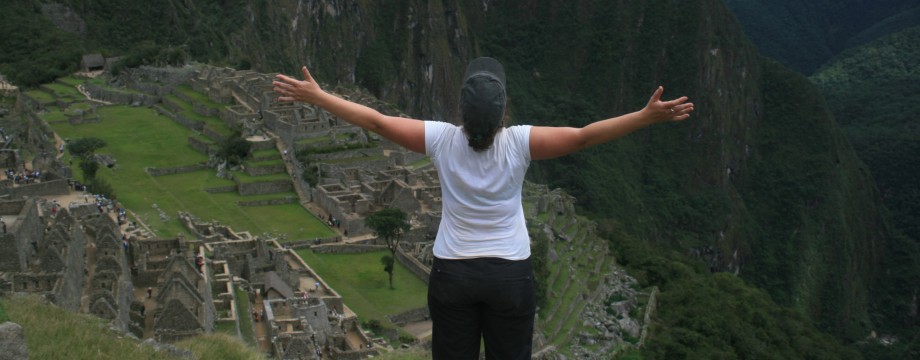
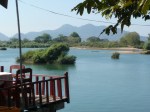
Categories: Laos, travel | 2 Comments

Pakse

I feel like I’m on the cusp of something, a transition point between what was and what will be. But it’s frustratingly hard to define beyond that… perhaps it’s best not to force it. I should just do what I do and see what comes of it. And Pakse is as good a place as any for such contemplations…

For a couple of weeks now I’ve felt vaguely unfulfilled with where my travels are at. Not that I’m over Laos – far from it – it’s just that after five or six weeks here I feel like I have the measure of the place, that I understand it well enough to find staying here easy. Since Paksan(probably before then actually) I have not been fazed by the practicalities of getting around, getting a room, being fed and watered; whether in English or Lao I can manage my way here perfectly well now. Which means the wonder of the country has faded somewhat. Most places here are much like the others: relaxed, lazy even, with a gentle approach to life that feels both natural and pleasantly indulgent. Maybe too my desire to shut down and relaaax has finally run it’s course and I’m simply eager for more action? The truth is there are few attractions worthy of the name between Kong Lo cave and Pakse, so perhaps I’ve just been bored!

Pakse, in the far south of the country, is a fine place to be suffering this dilemma. It offers the best combination of Laos lifestyle and western tourist infrastructure I’ve yet come across. There are enough western-style hotels and guesthouses, restaurants and tour options to keep any traveller interested, yet it is understated and still undeniably Lao in atmosphere. And it’s not a busy place: though westerners and locals appear in equal numbers on the streets it is a sedate town where the streets are mostly empty and nothing hurries. There are loads of attractions in this province: nearby is the elevated coolness of the Bolaven Plateau with some spectacular waterfalls, there are several national parks with loads of trekking and kayaking options, the ancient ruins of Wat Phu Champasak which predate Ankor Wat in Cambodia are only an hour away, and the near-comatose serenity of the islands of Si Phan Don is just a couple of hours south.

Pakse is the last large town in Laos I can stay in before heading to Cambodia, and I’m reluctant to leave this country yet. I guess I don’t want the spell to end so I’ve spent almost a week in the area already, and will spend another week or so more before finally moving on. I haven’t been completely idle though: a one-day tour trekking to several waterfalls on the nearby Bolaven Plateau also took us to a tea plantation, the markets of Paksong and a model village where several minority groups are on display and sensitively explained; and I’ve just finished a two-day kayak trip to the Cambodian border which was awesome (and about which I’ll post separately shortly). Learning how to ride an elephant next week will also be a great experience, or perhaps just a unique and very memorable distraction?

I guess what I’m really feeling is the change in tone of this trip brought about by the sheer passage of time. Until now it has felt gloriously open-ended, and I genuinely haven’t given a thought to how much time is left or the fact that I will, eventually, have to return home. But even though I’m not quite at the halfway point I can already feel the downward slide, the inevitable increase in pressure caused by the knowledge that as every day passes I get one step closer to calling time on this idyllic journey. It’s a real catch-22: I’ve greatly enjoyed my time in Laos and I don’t want this part of the journey to stop, but I know that if I stay too long I’ll sully the memory of it. Yet while I know it’s time to move on soon I’m still hesitating at the point where I have to say goodbye… but I won’t whine any further. I know I’m very fortunate to be in this spot: it’s the kind of dilemma most people would kill to have to deal with 😉

Categories: Laos, travel | 2 Comments

Create a free website or blog at WordPress.com.

Design a site like this with WordPress.com
Get started